Showing posts with label parenting books. Show all posts

5/24/12

Things to Read - 7 Books About the Experience of Parenting (not the instruction manual type)

Lately, I've been reflecting on books that have shaped how I view parenthood. Not the instruction manual books, with their advise and goodwill, but fiction and memoirs that have stuck with me over the years. Plots and characters I can't let go of, for better or worse. Here are my top 7 (click on the book's picture to link to Amazon):


The Road
- This is probably the most depressing novel I've ever read. I stayed up all night to finish it, not because I particularly liked the book but because the plot disturbed me too much for sleep. In the morning, upon finishing, I threw The Road at the wall - frustrated, sad, and scared. But the story has never left me, it's "sticky" as Malcome Gladwell would say. The novel takes place in a future post-apocalyptic setting where food is scarce - crops can no longer grow (something has ruined the soil) and livestock is pretty much nonexistent. Mankind's survival depends on old canned food (where one can find it) and cannibalism.

McCarthy never explains how mankind ended up in this situation, rather he tells the story of a man and his young son walking "the road" in hopes of making it to the ocean, not even knowing if the ocean will offer any sort of refuge or change. The mother in the novel kills herself after realizing the bleakness of the situation, but the father carries on against all odds, convincing the boy that they are the "good guys", who refuse to submit to cannibalism and evil. Why does the father go on? Obviously out of love for his son, but where does this get them? What can this love accomplish in a world with no future? What would you do in such circumstances? Would you keep living in such horrendous conditions or "quit" like the mother? What would the "good" parent do?


The Short Story Trilogy - Chance, Soon, & Silence - from Alice Munro's Runaway
- In some ways, this trilogy disturbed me even more than the Road, due to the realism of the tale presented. The three connected stories all occur at different points in one woman's life. The first story tells of the random, somewhat ominous, encounter through which she meets her partner. The woman, Juliet, is confident in so many ways, though awkward regarding her studiousness. The second story occurs when Juliet travels to her childhood home to introduce her baby daughter to her aging parents. The health of Juliet's mother is slipping and her parents seem different than she remembers, less quirky and independent. In the final story, the baby daughter is now grown and seemingly random/odd/complicated events lead to her estrangement from Juliet. It's awful - reading about how this woman, who you've now glimpsed through the years, loses the opportunity to meet her grandchildren. To live without that part of life. To go on. It gives me chills. The fragileness of human connections and our endless capacity for loss.


American Pastoral
- My dad loved Philip Roth and though I'm not the author's biggest fan (to put it mildly) this book, recommended by my father, has always stuck with me. My dad called it The Parents' Book of Job (a wonderful five word summary). Seymour Levov has it all - he's charming, good looking, a college star athlete who marries Miss New Jersey. Plus he's a nice guy. And he loves his daughter - his awkward, unpopular daughter. Who slowly destroys Seymour's life. Eventually Seymour's daughter, in protest against the Vietnam War and the "system", plants a bomb in a local post office and the resulting explosion kills a bystander. Thus ruining the "perfect life" Seymour has created. Unlike the other books about parenting, I think this book remains important to me because at its core it presents child-rearing as something much more out of our control than parents of young children want to believe. Kids will be who they will be, even when showered with love.


Life Among The Savages
- Shirley Jackson's memoir of raising children in the 1940s is the list's only "happy" book. While some of the anecdotes are so dated as to make you cringe (smoking on the way to the delivery room) the majority of the book tells of experiences shockingly similar to life today - navigating department stores with children and their imaginary friends, the furnace going out, disagreements with elementary school teachers. Reminding me that life with kids is life with kids, regardless (in some ways) of time and place.


Revolutionary Road
- One of my friends said she couldn't finish this book because it hit too close. Like a kick in the gut. The whole book (also a movie) is about parental discontent during the 1950s. The wife in the novel never really adjusts to life as a housewife (or SAHM in today's vehancular), the dad doesn't like his job, their social life is static and boring. They long for greatness but aren't sure how to find it. At the end I cried and reflected on my own lack of greatness. Which (I must admit) does seem even larger since I've had children.


This Beautiful Life - The plotline of this Beautiful Life comes straight from the headlines. A family of four (with a kindergarten-aged daughter and a teenage son) moves to NYC for the father's new job, a big step up for him career-wise. One night the teenage boy, a "good" kid for the most part, goes to a party, gets drunk, and starts making out with a younger girl whom he does not find particularly attractive. Though the girl wants to go further, the boy heads home, somewhat disgusted with himself for hooking up with her in the first place. The next day the girl sends him a sexual video she made, dancing to Beyonce's "love to love you baby". Very sexual. Not sure how to handle the whole thing the boy forwards the video to one friend, his best friend. Who (of course) forwards it to a few other friends. You see where this is going. By the end of one weekend the video goes viral. The school suspends the boys, lawyers are hired, the father's job (which involves school oversight) is put on hold. And the reader watches a family slowly unravel.

The unraveling is where the book really hit me. The author does a beautiful job creating characters who are complex and confused and real, making it hard for the reader to cast judgment. And if there is blame, where does it lie? With the girl? Who should have known better. With the girl's parents? Apparently absent and rich. With the boy? Recipient of a gift he never wanted. With the boy's parents? Who somehow forgot to teach him how to handle such a situation. With the lawyers? Who make everything into a battle. With the school? For needing to find fault somewhere.

I don't know the answers. And Schulman doesn't give them to you. Rather she lets you hash it out for yourself, trying to figure out where we go wrong when, as the boy's mother says, "we love our children too much."


Blue Nights - Joan Didion's bitterly honest reflections on the unexpected death of her adopted daughter and on her own aging process (at age 75) read like a well-written diary of loss. Actually maybe diary isn't the right word, the book reads almost as if the reader can hear the thoughts in Didion's head, giving it an intensely personal feel, similar to eavesdropping. In this memoir Didion reflects on modern parenting - "[t]he very definition of success as a parent has undergone a telling transformation: we used to define success as the ability to encourage the child to grow into independent (which is to say into adult) life, to 'raise' the child, to let the child go" - adoption, and, most prominently, fear - "[o]nce she was born I was never not afraid. I was afraid of swimming pools, high-tension wires, lye under the sink, aspirin in the medicine cabinet . . . rattlesnakes, riptides, landslides, strangers who appeared at the door, unexplained fevers, elevators without operators and empty hotel corridors." A reminder that once you have a child thoughts of him or her will continually occupy your thoughts and days, regardless of whether or not the child is alive or dead.

Other "Parenting Books" That Have Stuck with Me (but that I'm too tired to write about):
*A Short History of Women: A Novel
*Sophie's Choice (an obvious pick)
*The Awakening
____________________________

What about everyone else? What books have really affected your views on parenting?


11/3/11

Things to Read- Three Parenting Books for People Who Dislike Most Parenting Books

I have mixed feelings about parenting books. Sometimes I find they act as a wonderful light in the storm, so to speak. Other days, they force me to overthink and over-question everything I do. Thus, sometimes I need parenting books that emphasize the fun and wonder of life and that "let me be me" for lack of a better term. These are my favorites and I reference them often:


1. (The Tao) When I was pregnant with T my yoga teacher recommended The Parent's Tao Te Ching: Ancient Advice for Modern Parents
to our prenatal class by saying that she kept a copy on her nightstand and read a few pages every night. At the time I remember thinking, "seriously? every night?" I now keep a copy on my desk and read it weekly if not daily. In today's environment of helicopter parenting I find comfort in a book that reminds me to look at the world and accept it and love it. The Parent's Tao Te Ching contains so many wonderful quotes, that I had a hard time choosing only a few to share:

*"Don't mistake your desire to talk for their readiness to listen. Far more important are the wordless truths they learn from you. If you take delight in the ordinary wonders of life, they will feel the depth of your pleasure and learn to experience joy. If you walk with them in the darkness of life's mysteries you will open the gate to understanding."

*"Stay at the center of your own soul. There is nothing else you can do."

*"Your children have important lessons to learn, but even more important ones to teach . . . . How to pay complete attention. How to play all day without tiring. How to let one thing go, and move on to another with no backward glances."

*"If you overly protect your children they will fear failure and avoid pain. But failure and pain are twin teachers of important lessons. Unless your children fully experience both how will they know they have nothing to fear?"


2. (Astrology) Like most pursuits that require an element of faith, I'm not exactly a believer in astrology. Nor am I a disbeliever. It interests me as do many other systems that attempt to explain why we are the way we are. When the kids were babies, however, I couldn't stop reading Your Starchild
(An Astrology Guide For You and Your Child), I was just so curious about who they were, what they would be like. Now days I enjoy rereading the book and see how my children's actual personalities line up with their "predicted" personalities (P is SUCH a scorpio). Dan thinks the whole book is crazy-talk (which makes sense, he is SUCH a Virgo). But, as crazy as it sounds, I really like the book's advice on how to parent children with horoscope signs that are different from your own. Even if the book's predictions turn out wrong, it serves as a good reminder that often my way of viewing the world will differ dramatically from how my children view it and that I can't always utilize a "one size fits all" approach to working with three completely different kids.


3. (Freethinking) As I've mentioned before, I'm not religious. I think most religions have a lot to offer, but the details stress me out (why no gay marriage? what's the problem with halloween? who is the holy ghost anyways? didn't any of the animals try to trample noah? why does god ask to have the whole town murdered just because a few people worship another god?). Anyways, I really want to expose my children to religion (the good and the bad) but I'm not always sure how to do that. In this pursuit, I've found Raising Freethinkers: A Practical Guide for Parenting Beyond Belief to be a really great resource. The book contains a lot of practical advice for raising children who aren't afraid to question everything. Regarding religion, the authors recommend providing unfiltered access to religious ideas and specifically inviting children to doubt and questions your own conclusions ("at every stage, in every way possible, underline the fact that she has the right to decide for herself."). Raising Freethinkers also deals with such tricky subjects as death, ethics, celebrating life, and community, with tons of resources - both suggested books and suggested community resources, such as the Unitarian Church.


6/30/11

Things to Read - Six Interesting Articles from Around the Web (on Parenting, College, Superbugs, and the Revolution)

1 (college). Advice for the class of 2011 - what would you emphasize?

2 (college). What is the purpose of college? - I'm unclear myself right now.

3. (parenting). Lori Gottlieb's article How to Land Your Kid in Therapy (Why the obsession with our kids' happiness may be dooming them to unhappy adulthoods) in the Atlantic should be required reading for all parents. According to Gottlieb, a psychotherapist, she continually sees patients in their 20s or early 30s suffering from depression and anxiety who have "'awesome' parents . . . fabulous siblings, supportive friends, an excellent education, a cool job, good health, and a nice apartment." The influx of such patients lead Gottlieb to wonder if the problems of this generation stem from the fact that rather than having neglectful parents, these adults were raised by parents who had "done too much." As summarized by Gottlieb, "[h]ere I was, seeing the flesh-and-blood results of the kind of parenting that my peers and I were trying to practice with our own kids, precisely so that they wouldn’t end up on a therapist’s couch one day. We were running ourselves ragged in a herculean effort to do right by our kids—yet what seemed like grown-up versions of them were sitting in our offices, saying they felt empty, confused, and anxious. Back in graduate school, the clinical focus had always been on how the lack of parental attunement affects the child. It never occurred to any of us to ask, what if the parents are too attuned? What happens to those kids?"

The article goes on to discuss other research on this topic. I especially found the comments of Paul Bohn, a psychiatrist at UCLA, insightful. According to Bohn, "many parents will do anything to avoid having their kids experience even mild discomfort, anxiety, or disappointment—'anything less than pleasant,' as he puts it—with the result that when, as adults, they experience the normal frustrations of life, they think something must be terribly wrong."

"Consider a toddler who’s running in the park and trips on a rock, Bohn says. Some parents swoop in immediately, pick up the toddler, and comfort her in that moment of shock, before she even starts crying. But, Bohn explains, this actually prevents her from feeling secure—not just on the playground, but in life. If you don’t let her experience that momentary confusion, give her the space to figure out what just happened (Oh, I tripped), and then briefly let her grapple with the frustration of having fallen and perhaps even try to pick herself up, she has no idea what discomfort feels like, and will have no framework for how to recover when she feels discomfort later in life. These toddlers become the college kids who text their parents with an SOS if the slightest thing goes wrong, instead of attempting to figure out how to deal with it themselves. If, on the other hand, the child trips on the rock, and the parents let her try to reorient for a second before going over to comfort her, the child learns: That was scary for a second, but I’m okay now. If something unpleasant happens, I can get through it. In many cases, Bohn says, the child recovers fine on her own—but parents never learn this, because they’re too busy protecting their kid when she doesn’t need protection."

The article goes on to quote Barry Schwartz, a social scientist at Swathmore, "We want our kids to be happy living the life we envision for them—the banker who’s happy, the surgeon who’s happy" even though those professions “might not actually make them happy.” "We’re not so happy if our kids work at Walmart but show up each day with a smile on their faces,” Schwartz says. “They’re happy, but we’re not. Even though we say what we want most for our kids is their happiness, and we’ll do everything we can to help them achieve that, it’s unclear where parental happiness ends and our children’s happiness begins.”

The article concludes with the reminder (which I really should attach to a pinboard somewhere) that "[o]ur children are not our masterpieces." A great article, I highly suggest it (thank you, Julia, for the link!)

4 (superbugs). The Rise of Superbugs in the Atlantic - "Today, nearly 70 percent of all antibiotics used in the United States are given to healthy farm animals. Drugs that can mean the difference between life and death in humans are routinely mixed into animal feed to make them grow faster and to compensate for unsanitary living conditions. It's a wasteful practice that squanders one of the most powerful tools of modern medicine." SCARY!!!

5 (the revolution). If you want to be depressed but educated, then you MUST read Chris Hedges's Endgame Strategy on why the revolution must start in America. "The game is over. We lost. The corporate state will continue its inexorable advance until two-thirds of the nation and the planet is locked into a desperate, permanent underclass. Most of us will struggle to make a living while the Blankfeins and our political elites wallow in the decadence and greed of the Forbidden City and Versailles. These elites do not have a vision. They know only one word: more. They will continue to exploit the nation, the global economy and the ecosystem. And they will use their money to hide in gated compounds when it all implodes. Do not expect them to take care of us when it starts to unravel. We will have to take care of ourselves. We will have to rapidly create small, monastic communities where we can sustain and feed ourselves. It will be up to us to keep alive the intellectual, moral and cultural values the corporate state has attempted to snuff out. It is either that or become drones and serfs in a global corporate dystopia. It is not much of a choice. But at least we still have one."

6 (parenting). How to Talk to Little Girls "Ask her what she's reading. What does she like and dislike, and why? There are no wrong answers. You're just generating an intelligent conversation that respects her brain. For older girls, ask her about current events issues: pollution, wars, school budgets slashed. What bothers her out there in the world? How would she fix it if she had a magic wand? You may get some intriguing answers. Tell her about your ideas and accomplishments and your favorite books. Model for her what a thinking woman says and does."

3/17/11

Things to Read - Nurture Shock & Talking to Kids About Race

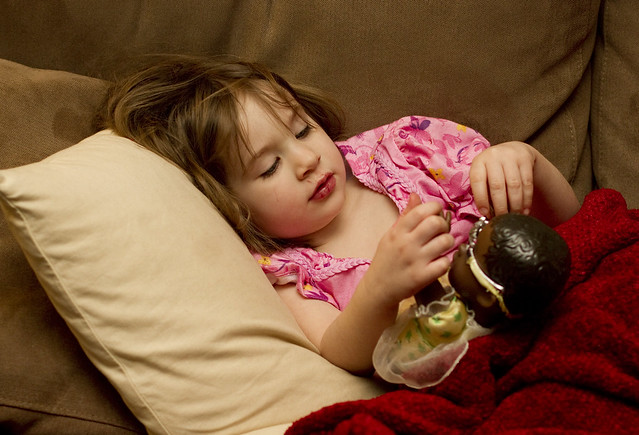
tiana

I have a love/hate relationship with parenting books. Some of them just seem so gimmicky that I end up turned off by the whole genre, but then I have freak out moments when I realize I have no idea what I'm doing (I majored in Chemistry and went to law school, I have no siblings, I barely ever babysat, children are an enigma to me) and realize that expert advice may be needed. So goes the pendulum of my life. But a friend recommended NurtureShock: New Thinking About Children and I figured I'd check it out. I really liked the book for many reasons, foremost among them the fact that the author isn't merely telling you his or her own views and experiences, instead it summarizes expert data and studies (on many different subjects) often with surprising results. I found it a fascinating read about how the brain works and how people learn, so even if you don't have kids, it's worth checking out.

One of the book's many points is that white people don't talk to their children about race [not a surprise here] and how troubling this is. According to the book, children are developmentally prone to in-group favoritism, hence if a child identifies someone as looking like him/her, the child is more likely to "like" that person. So if you don't talk about race, you may be unintentionally encouraging the biased choices that your child is making. I, probably like a lot of middle class white people, have completely avoided discussing race. I just didn't see a need to rock the boat. F goes to a preschool with minority kids - one of her best friends at preschool is black, her "love" is Hawaiian [if you find it problematic that a 5 year old refers to a boy as "my love", I'm right there with you], one of her favorite movies is Princess and the Frog. Everything seems to be going fine. But on Saturday, while P was at a playdate and F was home sick, I decided to broach the topic.

"So, F, have you ever noticed that some people are different colors than other people?"

"Of course, some of my friends are sort of brownish and my love [ugh, that term again] has this lovely goldish skin. [Apparently, the problem with not talking about race is that kids use the ENTIRELY WRONG vocabulary to describe people] And, you want to hear something sort of crazy, sometimes kids have totally different skin than their moms or dads? I saw a lady in the store who was my color and her daughter was sort of brown - isn't that crazy mom?"

Then, probably because I seemed curious about the salient features of her friends, F proceeded to show me a list, which I've seen before, on which she had printed the names of all her favorite friends when she was first learning to print her letters. What I hadn't notice before is that the colored markers she used to write her friends' names . . . yup, you guessed it . . . matched their skin color. So J (who is black) had her name written in brown, whereas E (who has red hair) had her name written in red, and F's "love" was written in orange - apparently as close she could get to his "lovely goldish" (F's words). It's sort of funny because I've been really impressed by how well F can recognize all her friends' names in writing when she struggles to read other long words, but now it makes sense - she color-coded them to help her remember. Apparently F is not only aware of race, she is hyper-aware of race, but what does this mean?

"So, F, do you think skin color matters? Would you ever pick a friend based on the color of their skin?

"Of course not, god made everyone different. This is how god planned it. Skin color is just another way that everyone can do their own thing." (yes, she literally said these words, all of a sudden all my doubts about religious preschool disappeared).

So now for the big question - "But is one skin color better than the others?" Totally holding my breath, now it would be decided, was my 5 year old a racist? No, please tell me no.

"Of course, mom" - I have failed. I have failed. I have failed - "brownish people are just prettier. They look nicer when they're old and they never get moles all over them like you have." Wait, what is going on here? my daughter wants to be black? Apparently. "So F, you like your skin color too right?" "Well, it's okay, but I wish it was um browner or more sort of goldish." All of a sudden, her whole childhood went by in a flash - we voted for Barack Obama (yeah, in case you haven't guessed, we're liberal like that), our favorite princess is Tiana (she is the only one who ever has a job after all), her best friend's parents are an inter-racial couple and they have the most perfect house in the neighborhood (F literally said upon arriving, "it's just beautiful, mom. everything in it is just beautiful.") And, then there are my moles (poor moles, loved by no one, including dermatologists and children). So where to go from here? I have no idea. She's 5, things will change, one day she'll like how she looks, then she'll hate it, then she'll like it again. Isn't this life? I guess the important thing is I opened the dialogue, and for that I can breathe a sigh of relief.

Of course, then I tried to have the same conversation with 4 year old P when she returned from her playdate. "So, P, have you ever noticed that some people are different colors than other people?" Complete blank. "No" (a somewhat surprising answer for a kid who won't go anywhere without a Tiana babydoll in her arms). So I labored on, "well, do some of your friends look different than other friends?" "All my friends are beautiful mom." Enough said.

What about everyone else? Have you talked to your kids about race? How did it go?

In case you're wondering, NurtureShock: New Thinking About Children makes lot of interesting other points as well, including: praise isn't always good, IQ tests aren't accurate until at least third grade, parents shouldn't discourage tattling, and the importance of teaching self-control. I highly suggest it.

LinkWithin

Related Posts Plugin for WordPress, Blogger...